What is Ovarian Cancer Awareness Month?
Every March is Ovarian Cancer Awareness Month. It's our chance to put ovarian cancer in the spotlight.
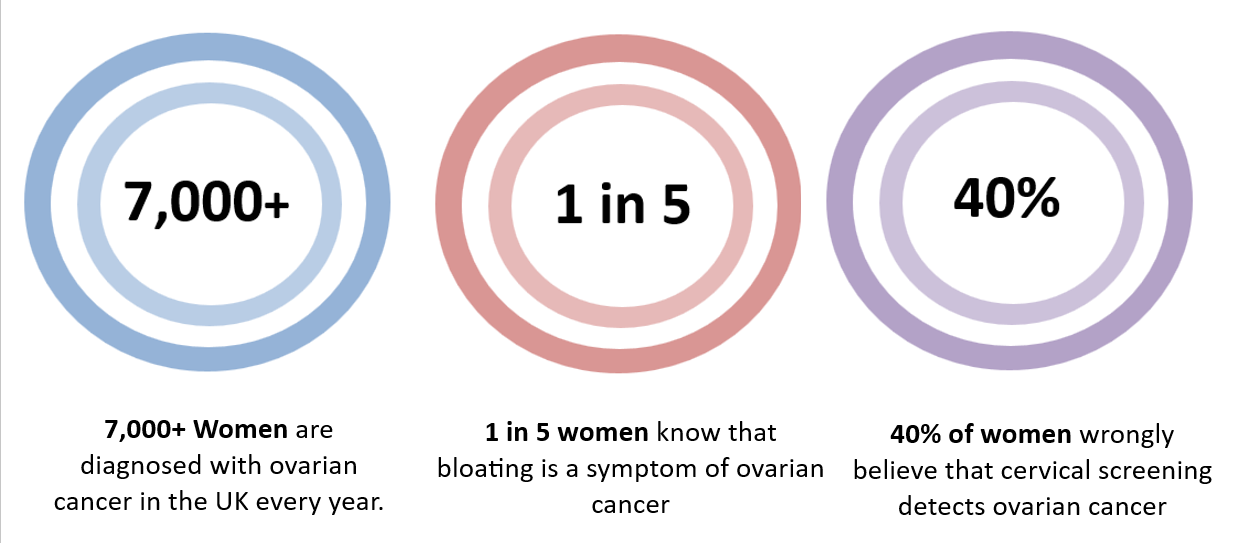
In the UK, over 7,000 women are diagnosed with ovarian cancer every year. Two thirds of women are diagnosed with ovarian cancer too late when the cancer is harder to treat. And every day, 11 women die.
We won’t accept that – and we know that you won’t too. Not when survival rates in other countries are so much higher. And not when we can do something about it right now.
We can’t afford to stand still and we need you with us.
Why do we need an awareness month?
Two thirds of those with ovarian cancer are diagnosed too late when the cancer has already spread. We’re now in an awareness crisis.
What are the symptoms of ovarian cancer?
- persistent bloating (not bloating that comes and goes)
- feeling full quickly and/or loss of appetite
- pain in your tummy or pelvis (the area between your hip bones)
- needing to wee more urgently or more often than usual.
Sometimes there can be other symptoms:
- changes in bowel habits (diarrhoea or constipation)
- fatigue (feeling very tired)
- losing weight without trying.
Any unusual bleeding from the vagina before or any bleeding from the vagina after the menopause should always be investigated by a GP.
Symptoms will be:
- new – they're not normal for you
- frequent – they usually happen more than 12 times a month, or 3 times a week
- persistent – they don't go away.
Worried about your symptoms?
If you regularly experience any one or more of these symptoms it's important that you contact your GP, even if they're mild. Your GP should arrange for a CA125 blood test. They may also order ultrasound scans of your ovaries and tummy. If your symptoms don't go away, go back to your GP or ask for a second opinion within a month
Tell your GP if one or more relative in your close family has had cancer especially if the cancer affected your mother, father, brother or sister. This is because ovarian cancer can run in families.
Ovarian cysts can produce symptoms similar to those for ovarian cancer but they aren't known to increase the risk of ovarian cancer. Other conditions such as irritable bowel syndrome (IBS) also have symptoms similar to ovarian cancer but new cases of IBS are very unlikely in women over the age of 50.
For more information about Ovarian Cancer or how to get involve visit Ovarian Cancer Awareness Month | Target Ovarian Cancer